Photobooth Supply Co.
Photo booth hardware and software solutions
About the company
Photobooth Supply Co. specializes in producing both hardware and software for the photo booth industry. Alongside their innovative products, the company is dedicated to providing extensive support to their customers, helping them navigate and expand their businesses.
Task
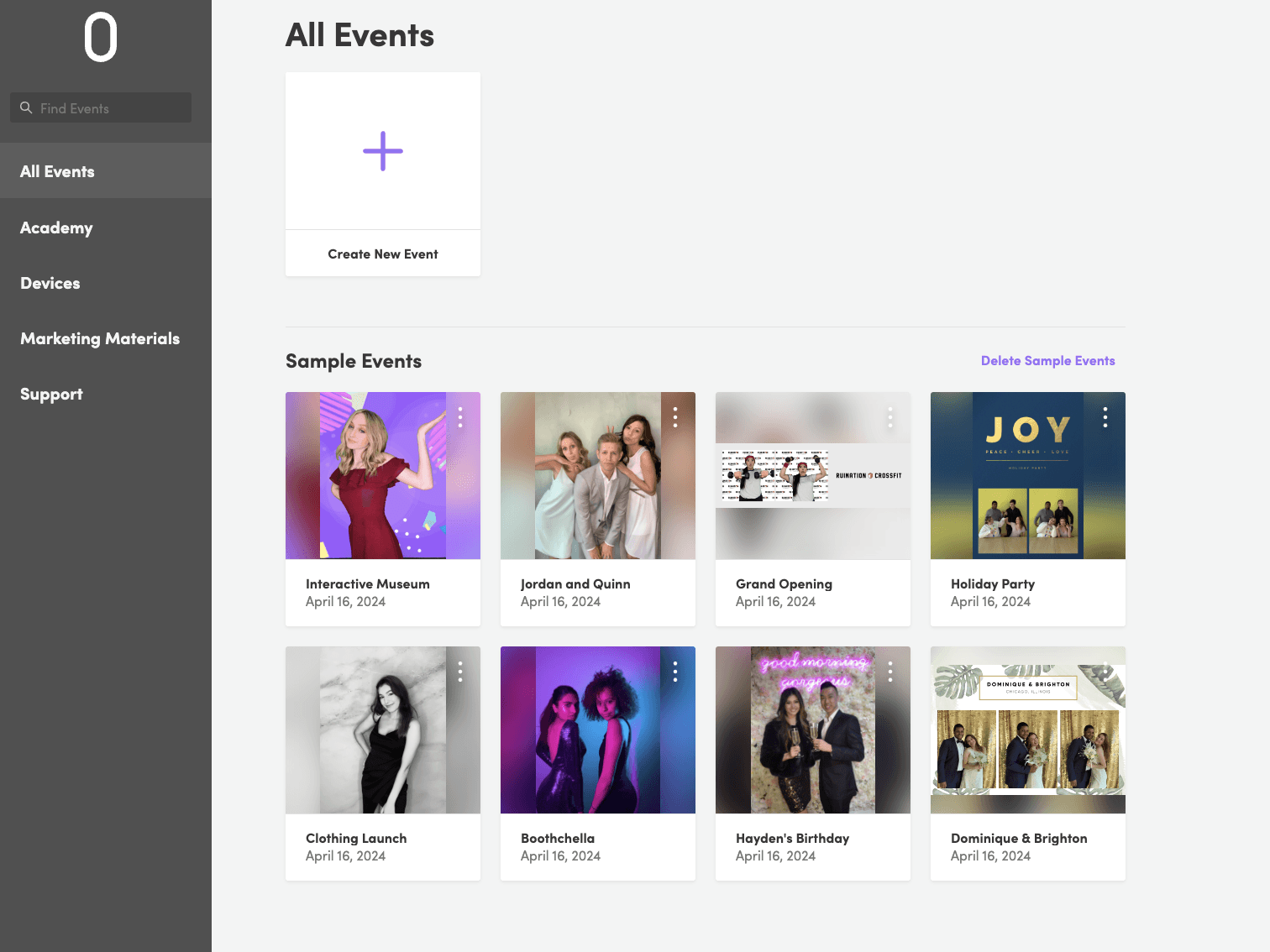
The iOS and web apps, known as Salsa, had distinct appearances, which led to confusion among users switching between platforms. Our initial goal was to simplify and unify the design for a smoother experience. However, as we delved into the redesign process, we decided to take it a step further. This led to the creation of Fiesta, a new app that not only matches Salsa's features but also offers enhanced user-friendliness and scalability for future growth. Additionally, Fiesta introduces long-awaited features that our customers have been asking for. As one of the two designers on the team, I was appointed as the lead designer due to my past experience.
Start of the re-design
We kicked off by mapping out the app's architecture and brainstorming ways to enhance it. Throughout this phase, we collaborated closely with the company's CEO, who spearheaded the initial designs for Salsa. From there, we transitioned to crafting lo-fi wireframes to lay the groundwork for the app's development.
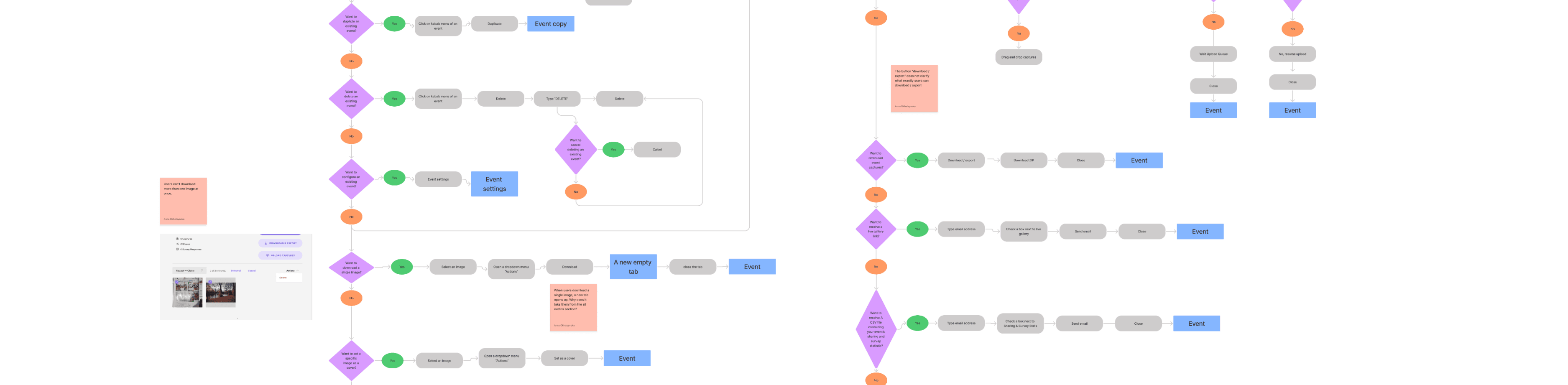
One exciting innovation we introduced was the ability for users to preview their selected settings directly, a departure from the previous setup where settings were only visible upon launching a photo booth event on an iPad. Additionally, by consolidating certain settings, we streamlined the event setup process and eliminated redundancy.
Before
After
Hi-fi designs
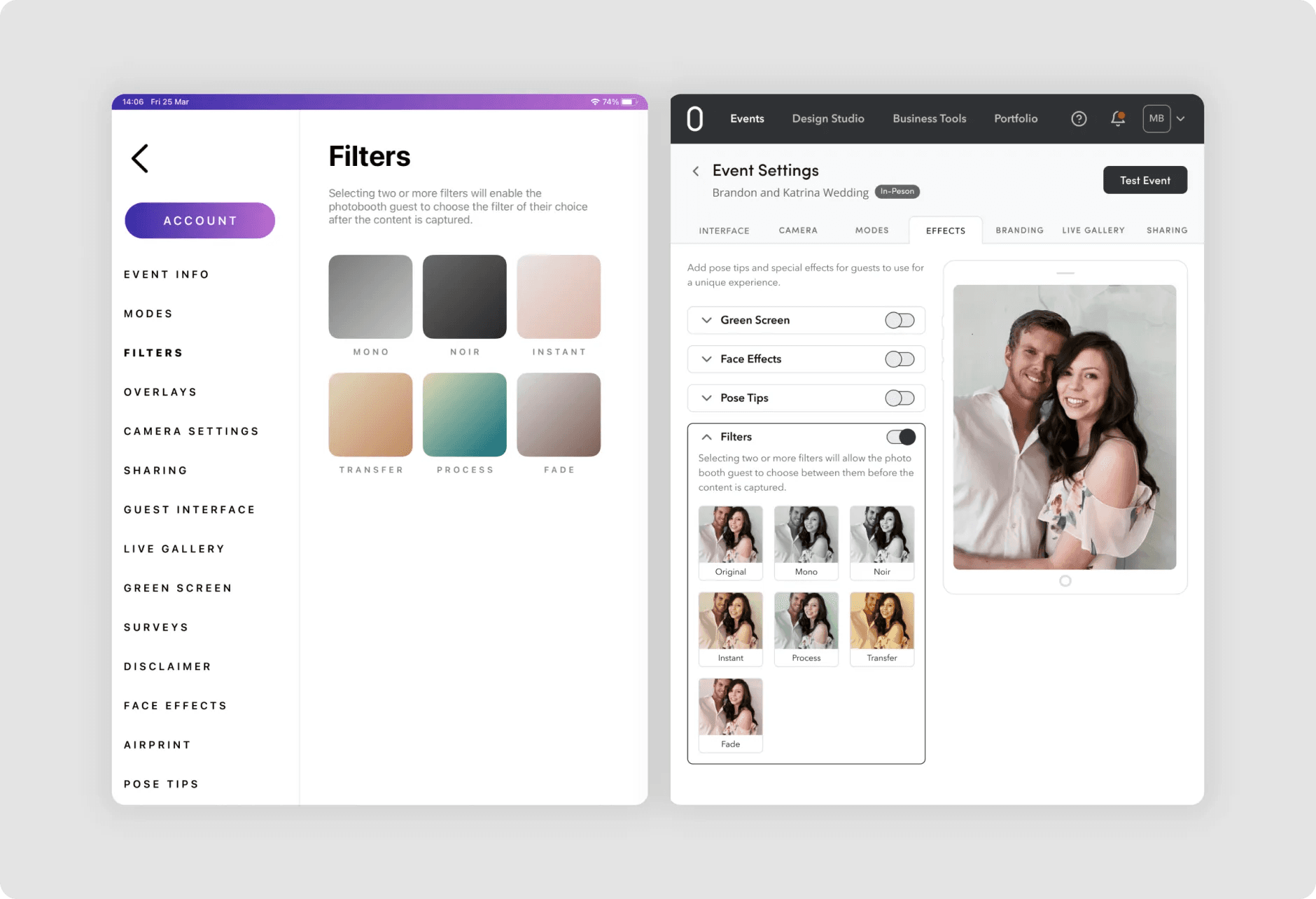
After finalizing the lo-fi phase, we transitioned to hi-fi designs. We shared several visual concepts with the CEO, along with font pairings to enhance legibility and typography hierarchy. Our aim was to maintain a grayscale color scheme throughout the app, allowing users to focus on event design without distraction. To streamline navigation, we transformed the sidebar into tabs, enabling users to adjust settings step-by-step while retaining the flexibility to switch between them. Ultimately, our objective was to achieve feature parity with Salsa while enhancing the overall user experience. Considering the app's usage across desktop and iPad (both on web and iOS), our design approach prioritized tablet compatibility. Additionally, we aimed to extend these features to the iPhone, ensuring responsiveness across all devices.
As we progressed with the hi-fi screens, the development team initiated their work concurrently. It was determined that a new app, offering enhanced stability and better suited for multi-platform usage, would be developed.
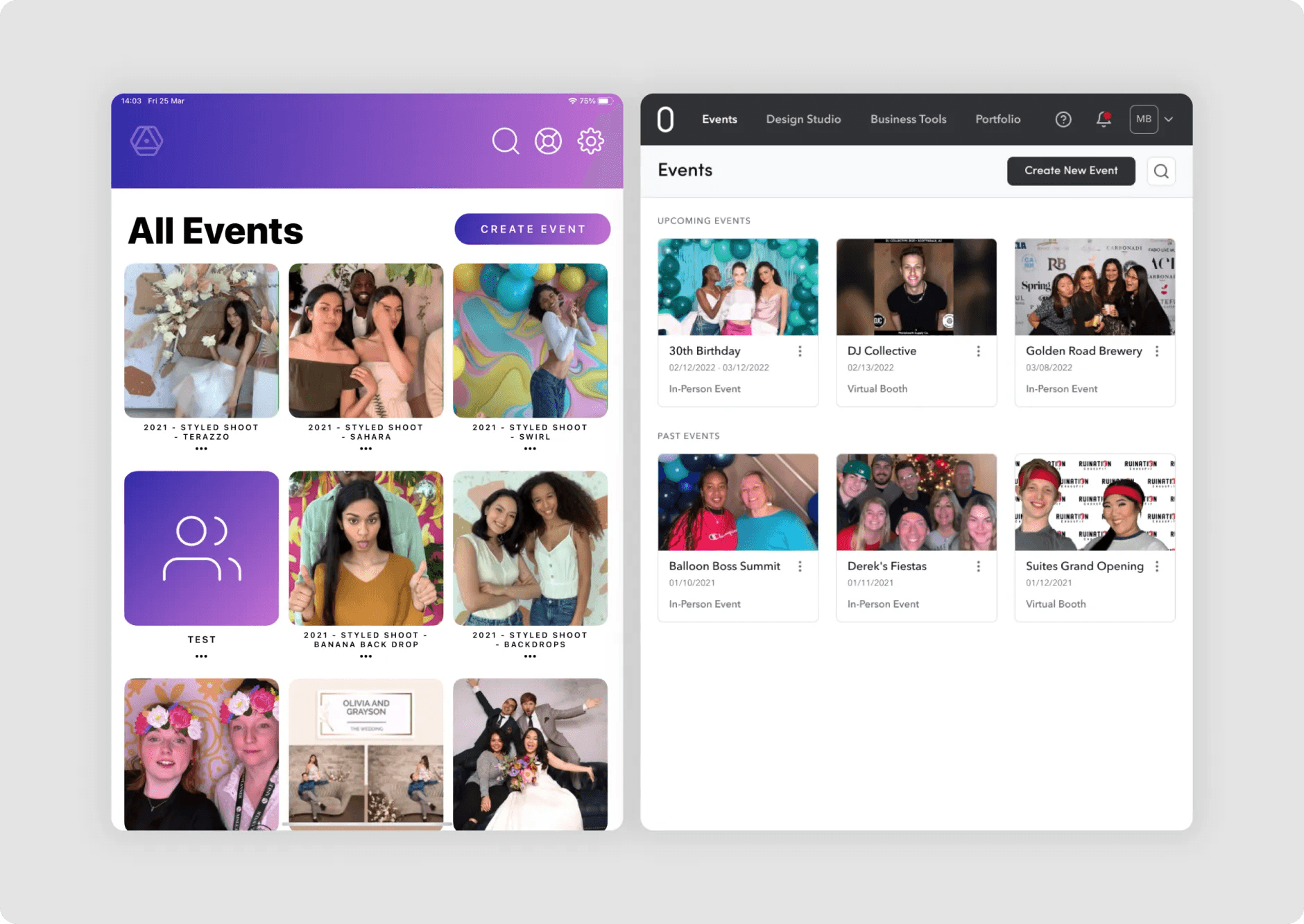
Before
After
Future updates
As we delved into redesigning the app, we began gathering feedback from users to lay the groundwork for future enhancements. Patterns emerged in their wants and needs; some were addressed in the redesign, which greatly improved the user experience, while others remained unmet. To determine the next set of features, we utilized frameworks like RICE prioritization and Impact Effort Matrix, conducted numerous user interviews to better understand our users and their needs, and also performed competitor analysis. However, achieving complete feature parity was never our aim; instead, we focused on equipping our users with tools and resources to foster business growth.
As we develop new features, we make sure to test them thoroughly and gather feedback not only from our internal SMEs but also from our valued clients with whom we've built strong relationships.
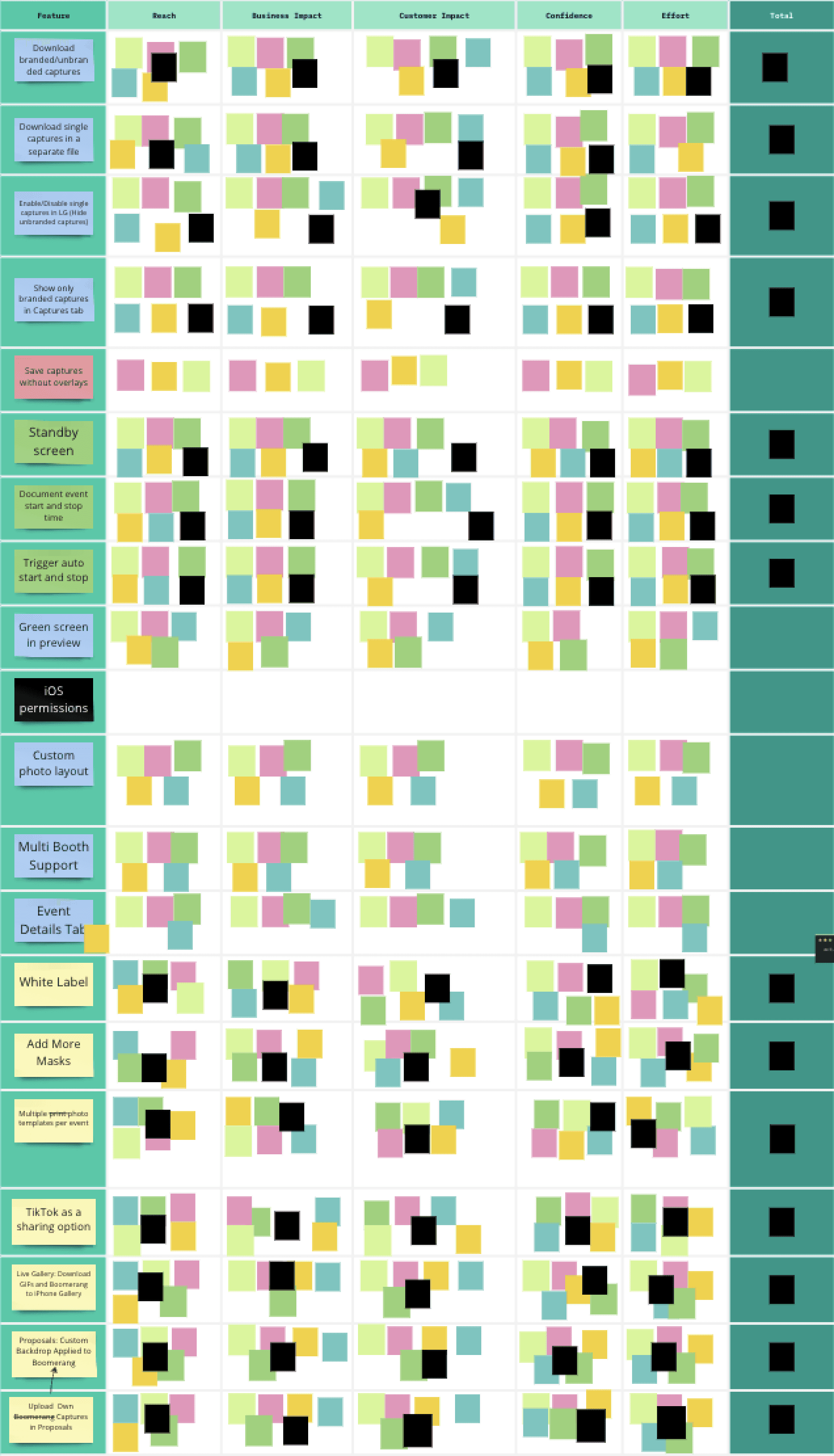
RICE Prioritisation
Website bundle page redesign
One of my tasks involved redesigning a website page page. This page features a bundle offer where potential customers can explore the product and consider purchasing a photo booth. My main aim with the redesign was to ensure that potential customers could easily see the benefits they would receive along with the main product.
I wanted to create a design that felt spacious and allowed room for each element to shine.
In the previous design, a lot of information about the offers was hidden. I completely restructured the page to highlight what is included in each package.
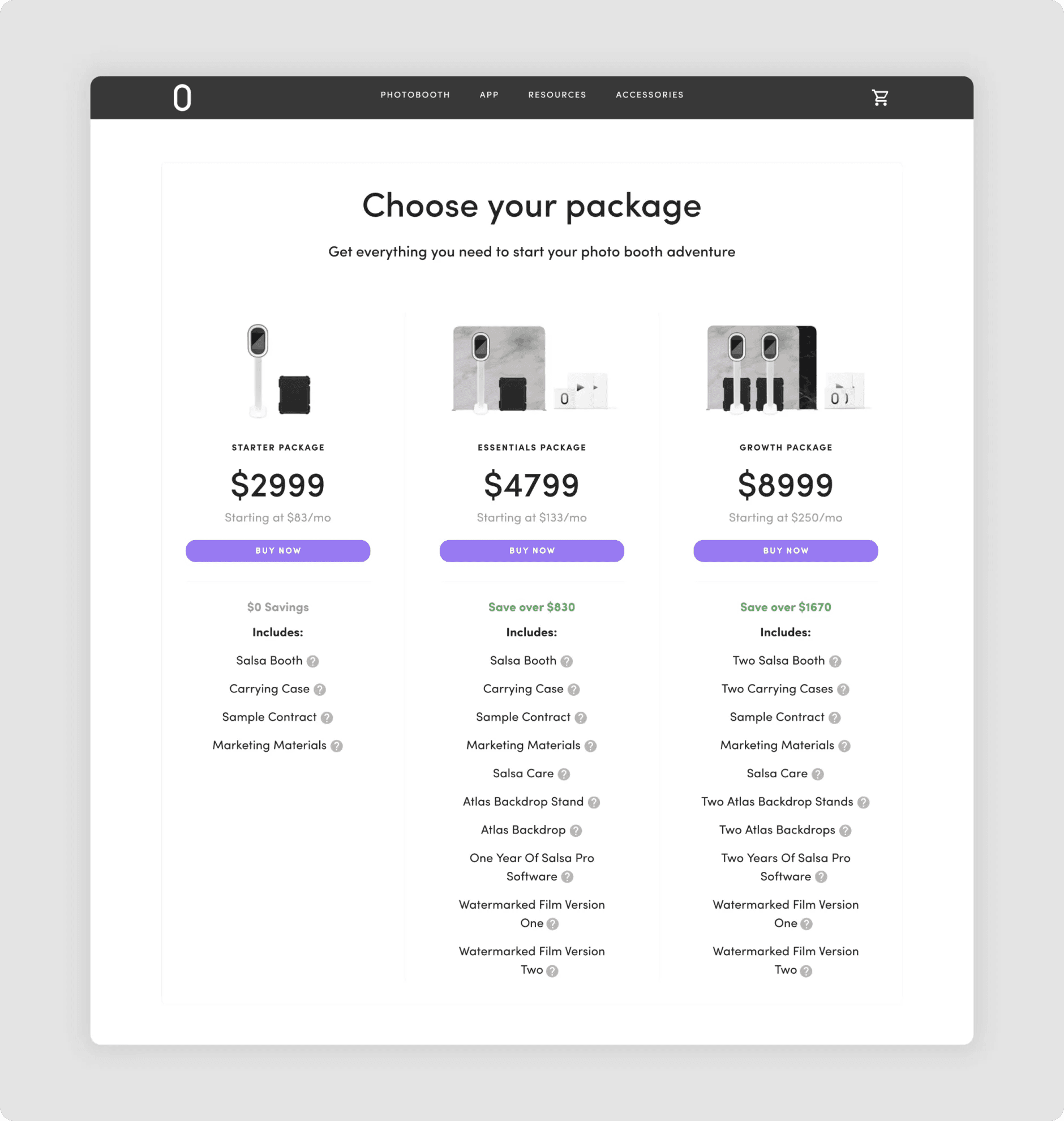
Here's how I approached it:
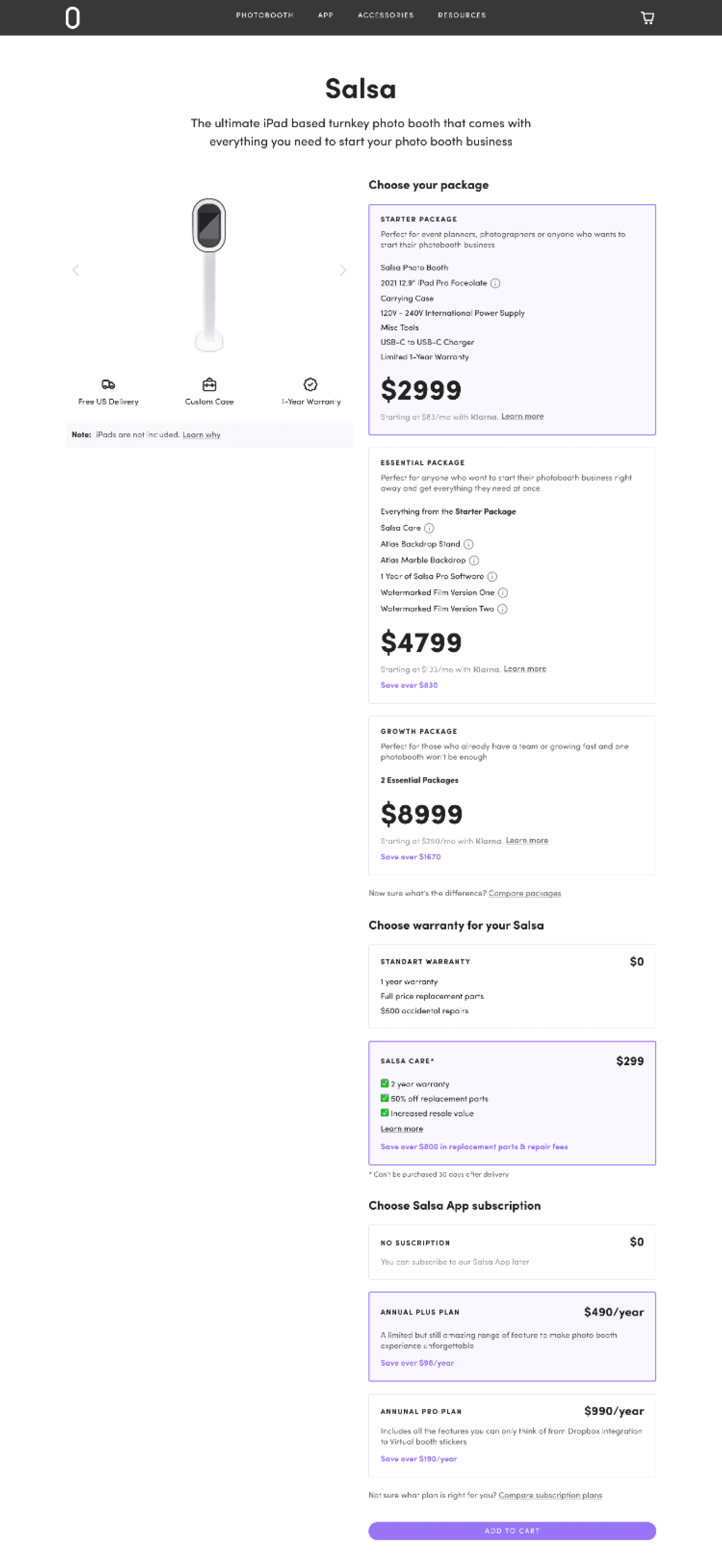
When a user selects a product, a box containing information about the package opens up. The specifications change based on the selected package. This decision allowed me to keep the page clean and informative at the same time.
I recognize the importance of these design details for the success of the product. They help manage user expectations and ensure that potential customers are well-informed and satisfied. The final version is live and running.
LinkedIn. Older projects. Medium